
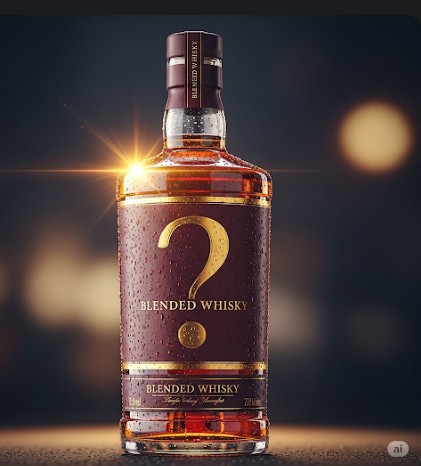
Celebrity Whiskey
Traveller Whiskey is the much-anticipated collaboration between Buffalo Trace Master Distiller Harlen Wheatley and musician Chris Stapleton. There’s a good amount of speculation swirling around, especially concerning what exactly goes into that bottle.
The label proudly declares it a “Blended Whiskey,” and that term often triggers questions. Some of you might have heard rumors that it contains Canadian whisky, or even grain neutral spirits. Let’s break down the facts and clear up the confusion.
“Blended Whiskey” Defined
First, let’s talk about what “Blended Whiskey” means in the U.S., according to the TTB:
- Minimum 20% Straight Whiskey: By law, a “Blended Whiskey” in the U.S. must contain at least 20% “straight whiskey” on a proof gallon basis. “Straight whiskey” means it’s been aged for at least two years in new, charred oak barrels (with an exception for straight corn whiskey, which can use used or uncharred new oak).
- The Rest is… flexible: The remaining 80% can be a combination of other whiskies (aged or unaged), and/or grain neutral spirits (GNS). This is why “Blended Whiskey” sometimes gets a bad rap, as it can include a high percentage of unaged GNS.
Traveller’s Key Distinction: No Grain Neutral Spirits
Here’s where Traveller Whiskey explicitly sets itself apart and where Buffalo Trace has been very clear: Traveller Whiskey contains 0% grain neutral spirits.
This is a significant detail. While the “Blended Whiskey” classification allows for GNS, Sazerac has chosen not to use it. This means every drop in your Traveller bottle is, indeed, whiskey of some kind. If GNS were used, TTB regulations would require a commodity statement on the label disclosing the percentage of neutral spirits.
Why It’s NOT Canadian Whiskey
This is a point where some common rumors miss the mark, and it’s important for us as informed whiskey enthusiasts.
If Traveller Whiskey contained any Canadian whisky, the TTB would legally require the label to state its foreign origin, likely as “Product of Canada” or similar.
And here’s the definitive word: Shortly after Traveler whiskey was released I had a conversation with Mark Brown, the Executive Chairman of Sazerac (Buffalo Trace’s parent company), he confirmed that while he wouldn’t disclose the exact components, the Traveller Whiskey label complies with all federal codes.
Since the Traveller Whiskey label does not have any such “Product of Canada” or foreign origin statement, and Mark Brown explicitly stated its full compliance, we can definitively conclude that it does not contain Canadian whisky or any other foreign-produced spirit. The TTB’s labeling regulations are strict on this point to ensure consumers know where their spirits originate, and Sazerac is clearly adhering to them.
So, What Is In It? (And the Barrel Talk)
While Buffalo Trace and Sazerac are famously tight-lipped about the exact components of their blends, here’s what we know and can deduce, based on the TTB regulations and Mark Brown’s confirmation:
- A Unique Blend from Sazerac’s Portfolio: Buffalo Trace states that Traveller is a “unique combination of whiskeys hand-selected from multiple Sazerac-owned distilleries.” Sazerac owns a vast portfolio of distilleries across the U.S., including Buffalo Trace, Barton 1792, and A. Smith Bowman, among others.
- American Whiskies Only: Given the TTB labeling and Mark Brown’s statement, all components must be American-produced whiskies. This could mean a blend of various American whiskey types.
- The Barrel Factor: While “straight whiskeys” (like Bourbon or Rye) must be aged in new, charred oak barrels, the “Blended Whiskey” classification allows for much more flexibility with the aging vessels for the non-straight components. This means Traveller could include whiskey aged in used barrels. This is a key point, as it opens up possibilities for different flavor profiles and production efficiencies.
- Bourbon: Almost certainly a significant component, likely from Buffalo Trace itself and/or other Sazerac-owned bourbon distilleries (like Barton 1792). These would adhere to the new charred oak barrel rule.
- Rye Whiskey / Wheat Whiskey / Malt Whiskey: Components of these types designated as “straight” would also be aged in new charred oak.
- Light Whiskey: Light whiskey is distilled at a higher proof (between 160 and 190 proof) and, importantly, is allowed to be aged in used or uncharred new oak containers. This would explain how they can include whiskey aged in used barrels while still being 100% whiskey (no GNS) and 100% American-made. Light whiskey typically offers a lighter flavor profile with less aggressive oak, which would align with the goal of an “easy-drinking” and “approachable” whiskey.
- “Whisky distilled from [name of grain] mash” (e.g., “Whisky distilled from Bourbon mash” or “Whisky distilled from corn mash,” etc.). For this class, the spirit must be distilled from a mash of not less than 51% of the named grain (e.g., corn for bourbon mash) at no more than 160 proof, and it must be stored in used oak barrels. This allows for a spirit with a bourbon-like grain profile but a lighter oak influence, fitting the “used barrel” possibility perfectly.
- Corn Whiskey (non-straight): While straight corn whiskey can use used or uncharred new barrels, other corn whiskey that doesn’t meet the “straight” definition could also be a component.
The “blended whiskey” classification allows them immense flexibility. Producers can create a consistent flavor profile using various stocks from their vast inventory, without being beholden to the strict definitions of “straight bourbon” or “straight rye” for the entire blend. This helps them meet demand and maintain quality, even with limited aged stocks of certain whiskies.
So, while the exact recipe remains a trade secret, we can confidently say: Traveller Whiskey is an American-made blended whiskey, it contains no neutral grain spirits, and it’s crafted from a selection of whiskies from Sazerac’s diverse U.S. distilleries, potentially including whiskey aged in used barrels to achieve its desired profile.
Good breakdown. I wouldn’t have necessarily concluded that it didn’t have Canadian whiskey in it from the absence of the foreign origin on the label as the TTB doesn’t appear to enforce that, but I will take Mark Brown’s word for it because he has proven to (1) be an honest person and (2) know what he is talking about.
Moving on to Sazerac’s portfolio of American whiskey, the only types of straight whiskey that jump to mind from their other products are bourbon and rye. Now Barton certainly makes blends, but I don’t know what is in them without research. And who knows what is going on at their TN facility (I certainly don’t). So, does Sazerac make other straight whiskeys (corn, wheat, malt, ALW) for itself in any quantity at its various American distilleries? Beyond that, I imagine they would have some of the used cooperage and whiskey distilled from [name of grain] mash elements around as those are cheaper and they wouldn’t necessarily advertise them or use them in their oh so premium products.
Sadly, I think this product perpetuates the poor reputation of American blends. Scotch blends, as a category, are held in high regard as they were created to use this flexibility to create a good and, most importantly, consistent flavor profile. And an American blend could certainly do the same. While less common, blends of American straight whiskeys can be quite good. But when that “straight” aspect is dropped from an American blend, it seems that you can be almost certain that a bunch of low-quality nonsense has been added. And the results follow accordingly. To be fair, I have not tried Traveller, but have heard nothing good from those that have. And its price is above a number of very solid straight whiskey products, so I think expectations are rightfully a bit higher than some no name blend. I guess kudos to Sazerac for putting out a product in the American blend category, which I think could be an area for new products that combine quality and value in a positive way, but I think this one misses the mark and is just a celebrity whiskey cash grab. As the kids say, change my mind.