“Dusty bourbon only tastes better because it sat in glass under a tin screw cap for forty years.”
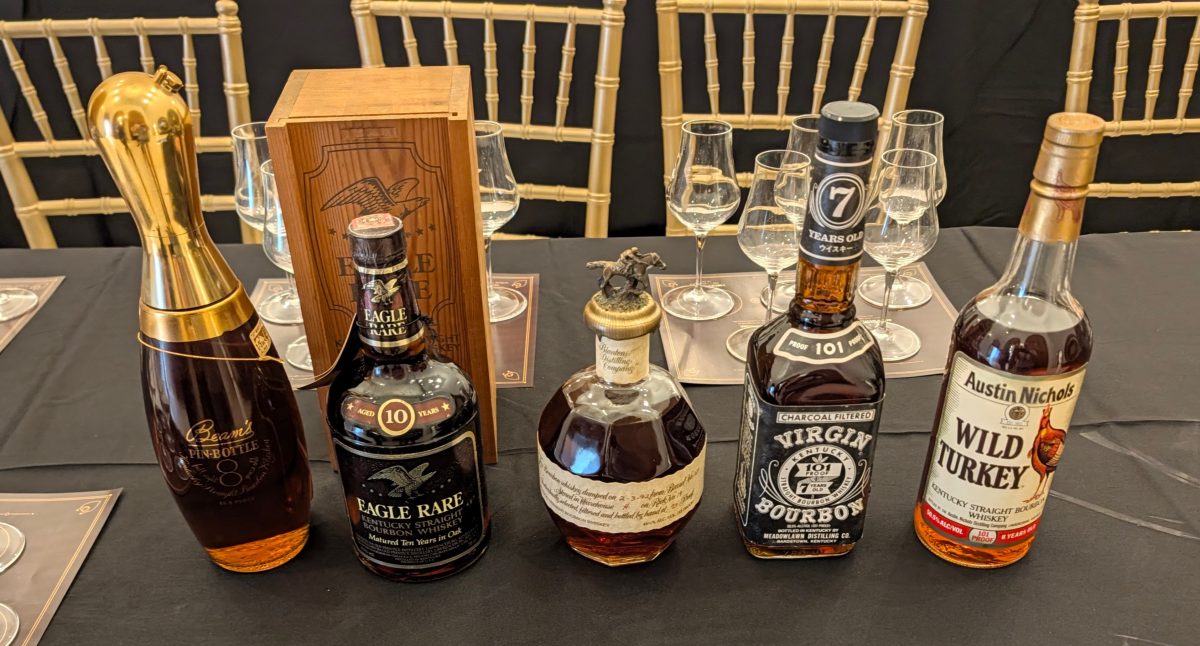
I see some version of this repeated constantly in the Facebook bourbon groups. Give an experienced drinker a pour of bourbon distilled between the 1970s and early 1990s—what collectors call a “dusty”—and it takes about three seconds to tell something is fundamentally different. The color is darker. The nose doesn’t hit you with raw alcohol; it leans into antique furniture, beeswax, pipe tobacco, and dense butterscotch. On the palate, it’s oily and heavy, coating your tongue instead of washing right off.
While minor micro-oxidation in the bottle is real, blaming the glass completely misses what was actually happening in the distillery. If you had pulled that 1978 bottle straight off the bottling line in Lawrenceburg or Bardstown and popped the cap that afternoon, it still would have tasted radically different from what rolls off those exact same stills today.
Modern American whiskey is cleaner, more consistent, and far more efficient to produce than it has ever been. But in engineering out the flaws, inefficiencies, and financial headaches of mid-century manufacturing, the industry also engineered out a specific flavor profile.
There wasn’t any magical “old-timey craftsmanship” fairy dust involved here. Vintage bourbon tastes the way it does because of five specific economic and industrial realities that no longer exist:
- The Glut Era’s hidden age statements
- Open cypress fermenters
- Low barrel entry proof
- Mash fertilization (and a forgotten 1980s carcinogen scare)
- Old-growth, air-seasoned white oak
Let’s break down the facts and clear up the confusion.
1. The Glut Era: Extra Age You Didn’t Pay For
In the 1960s, American distillers made a massive forecasting blunder. Riding post-war optimism, they expanded capacity and laid down millions of barrels, assuming bourbon demand would grow forever.
Then the 1970s hit, and consumer habits fell off a cliff. Younger drinkers ditched their parents’ brown spirits for light rum, tequila, and—above all—clear, neutral vodka. The Vodka Craze hit Kentucky like a sledgehammer. Distillers were suddenly sitting on an ocean of maturing whiskey that nobody wanted to buy, while the old bonded warehouse tax structure bled them dry every year the barrels sat.
Now look at the label on an everyday, working-class bottle from that era—say, an 86-proof, 6-year-old or 8-year-old straight bourbon. Under TTB (then BATF) regulations, an age statement is strictly a minimum guarantee. Putting 12-, 14-, or 16-year-old whiskey into a 6-year-old bottle is completely legal.
With warehouses bursting and cash flow drying up, distillers had two choices: dump mature stock down the drain, or blend ultra-aged barrels into their standard, everyday batches just to clear rack space and move product. They blended it. When you open an everyday dusty bottle from the late ’70s or ’80s, you are rarely drinking standard 6-year-old bourbon. You’re drinking 10- to 14-year-old whiskey that baked through a decade of Kentucky summers—sold at bottom-shelf prices simply because the industry was financially desperate.
2. Open Cypress Wood Fermenters
Walk into a modern Kentucky distillery today and you’ll see gleaming banks of 316-grade stainless steel fermenters equipped with automated cooling jackets and high-pressure Clean-In-Place (CIP) spray balls that sanitize the interiors with caustic washes between every run. It is sterile, repeatable chemistry.
Fifty years ago, almost everyone fermented in massive, open-topped tubs built from virgin tidewater cypress.
Cypress was used because it resists rot, but wood is porous. Deep inside the grain of those staves lived permanent colonies of resident microflora—wild yeasts and lactic acid bacteria like Lactobacillus. Distillers scrubbed them down and hit them with steam, but you cannot sterilize porous wood. At the tail end of a 72-to-96-hour fermentation, once the primary distiller’s yeast started dying off, those resident bacteria woke up, chewed through residual sugars, and pumped lactic, acetic, and butyric acids straight into the distiller’s beer.
On top of that, cypress tubs didn’t have cooling jackets. In July and August, fermentation temperatures regularly ran away into the mid-90s. Heat stresses yeast, and stressed yeast throws off higher alcohols—fusel oils and fatty acids.
When you pump an acidic, congener-heavy mash into a copper beer still and apply heat, you trigger esterification. Alcohols and organic acids fuse together into volatile esters like ethyl lactate, ethyl butyrate, and ethyl acetate. Those compounds are directly responsible for tropical fruit notes, creamy textures, and that waxy mouthfeel. That signature “dusty funk” collectors hunt for wasn’t a secret recipe; it was wild bacterial biology thriving inside unjacketed wooden vats.
3. Lower Barrel Entry Proof
In 1962, federal code changed to raise the maximum legal barrel entry proof for bourbon from 110 to 125 proof. From a corporate accounting standpoint, the math was a no-brainer: higher proof means less water in the barrel, which means fewer expensive barrels and less warehouse square footage required to age the same volume of pure alcohol.
Today, almost every major producer fills barrels at 120 to 125 proof. Yet through the 1960s, ’70s, and well into the ’80s, many heritage distillers resisted the change, continuing to barrel at 100, 103, or 105 proof.
That 15-to-20-point difference completely changes the extraction chemistry inside the barrel. Water and ethanol act as competing solvents:
- Water dissolves wood sugars—hemicellulose breakdown products like glucose, xylose, and arabinose, plus the caramelized sugars created during toasting and charring.
- Ethanol aggressively extracts bitter tannins, wood resins, and harsh lignin byproducts.
When distillate enters a charred barrel at 105 proof, nearly half the liquid is water. It immediately dissolves dense wood sugars—pulling out butterscotch, caramel, and sweetness—while leaving behind much of the mouth-drying astringency.
Just as important is what happens when you dump the barrel. Whiskey barreled at 125 proof often climbs above 130 proof in a dry upper rickhouse, meaning a distiller has to add a massive volume of demineralized process water just to proof it down to 86 or 90 proof for bottling. That dilutes congener density. Whiskey barreled at 105 proof barely climbs at all, requiring minimal cut water at bottling. The spirit in your glass retains a far higher concentration of long-chain fatty acids, esters, and wood solids. That is the difference between whole milk and skim milk on your palate.
4. Mash Fertilization (and the 1985 Urethane Crisis)
Here is a piece of distilling history you won’t hear on a distillery gift-shop tour: mid-century distillers routinely fertilized their mash cookers.
Bourbon requires at least 51% corn, and vintage mash bills often pushed 70% to 75%. Corn brings plenty of starch, but it is severely deficient in Free Amino Nitrogen (FAN)—the dietary nitrogen yeast needs to build proteins and survive. Nitrogen-starved yeast leads to sluggish, stuck fermentations and bacterial spoilage. To keep fermentations ripping along cleanly, legacy producers dumped inorganic fertilizers—diammonium phosphate (DAP), ammonium sulfate, and mineral salts—straight into the mash.
When yeast runs out of easy nitrogen, it cannibalizes complex proteins to survive, producing harsh fusel alcohols (like isoamyl alcohol and isobutanol) that give new make a hot, kerosene-like burn. Feeding the yeast pure ammonium kept it healthy, prevented hydrogen sulfide (rotten-egg off-notes), and allowed delicate floral and orchard-fruit esters to survive the still cleanly.
So why did the industry stop doing it? Because in 1985, Canadian health regulators triggered a quiet crisis.
Back then, distillers weren’t just using mineral salts; they were also dumping agricultural-grade urea into their cookers. Regulators discovered that when residual urea boils inside a copper still, it reacts with ethanol to form ethyl carbamate (urethane)—a classified animal carcinogen. The FDA and BATF stepped in immediately with strict voluntary limits, effectively banning urea as a yeast nutrient overnight.
If you lab-test a genuine dusty bottle from the 1960s or ’70s today, you will routinely find ethyl carbamate levels in the hundreds of parts per billion, compared to the low single digits required in modern production. (At moderate drinking levels, the ethanol itself is still a far bigger health concern than the trace urethane.) Still, it’s a sobering reminder that vintage bourbon wasn’t an artisanal fairy tale—it was heavy mid-century industrial manufacturing, and that heavy hand with urea left both a distinct flavor profile and a permanent chemical fingerprint in the bottle.
5. Old-Growth Oak and Natural Air Seasoning
Finally, there is the barrel itself.
Modern cooperages rely heavily on timber harvested from managed, second- and third-growth forests. Those trees grow fast under open canopies, leaving wide annual growth rings. In today’s just-in-time supply chain, cut staves are often stacked outside for only a few months before being shoved into forced-air kilns to bake out the remaining moisture on a tight schedule.
Fifty years ago, white oak (Quercus alba) came from mature, slow-growth forests across the Ozarks and the Ohio River Valley—trees that were frequently 80 to 100+ years old when felled. Slow growth in a dense forest packs annual rings tightly together, creating a high density of tyloses (the natural cellular plugs in the wood’s vascular system). Tight grain forces whiskey to interact with the heartwood slowly rather than tunneling rapidly through porous wood.
More importantly, kiln drying was rare. Staves sat outside in open-air lumberyards for 18, 24, or even 36 months. Two to three years of Kentucky rain, snow, summer heat, and outdoor fungi fundamentally alters raw oak:
- Natural leaching: Rain and snow physically wash away water-soluble, bitter ellagitannins and harsh green-wood sap.
- Fungal breakdown: Ambient fungi secrete enzymes that chew on tough wood polymers, pre-digesting lignins into aromatic precursors like free vanillin and sweet oak lactones.
By the time an air-seasoned, old-growth stave hit the charring fire, the harsh “pencil-shavings” astringency had already been weathered out of it. That is why a 1970s bourbon could sit in wood for 12 years and emerge tasting like sweet butterscotch and worn leather, while a modern bourbon aged 12 years in a fast-growth, kiln-dried barrel runs a serious risk of tasting like dry, over-oaked plank.
The Takeaway
When you drink a great dusty bourbon, you aren’t tasting a lost secret formula or magic glass. You are tasting a vanished industrial ecosystem where an economic glut, wild cypress microflora, low entry proof, agricultural urea, and slow-seasoned old-growth timber all collided at the exact same moment in history.
Modern distillers have laser spectrometers, computer-controlled fermentation loops, and precision blending—and today’s bourbon is remarkably consistent because of it. You can’t recreate the 1970s in a modern plant, even if regulators let you. Dusty whiskey isn’t better simply because it’s old; it’s irreplaceable because the entire manufacturing world that created it is gone.